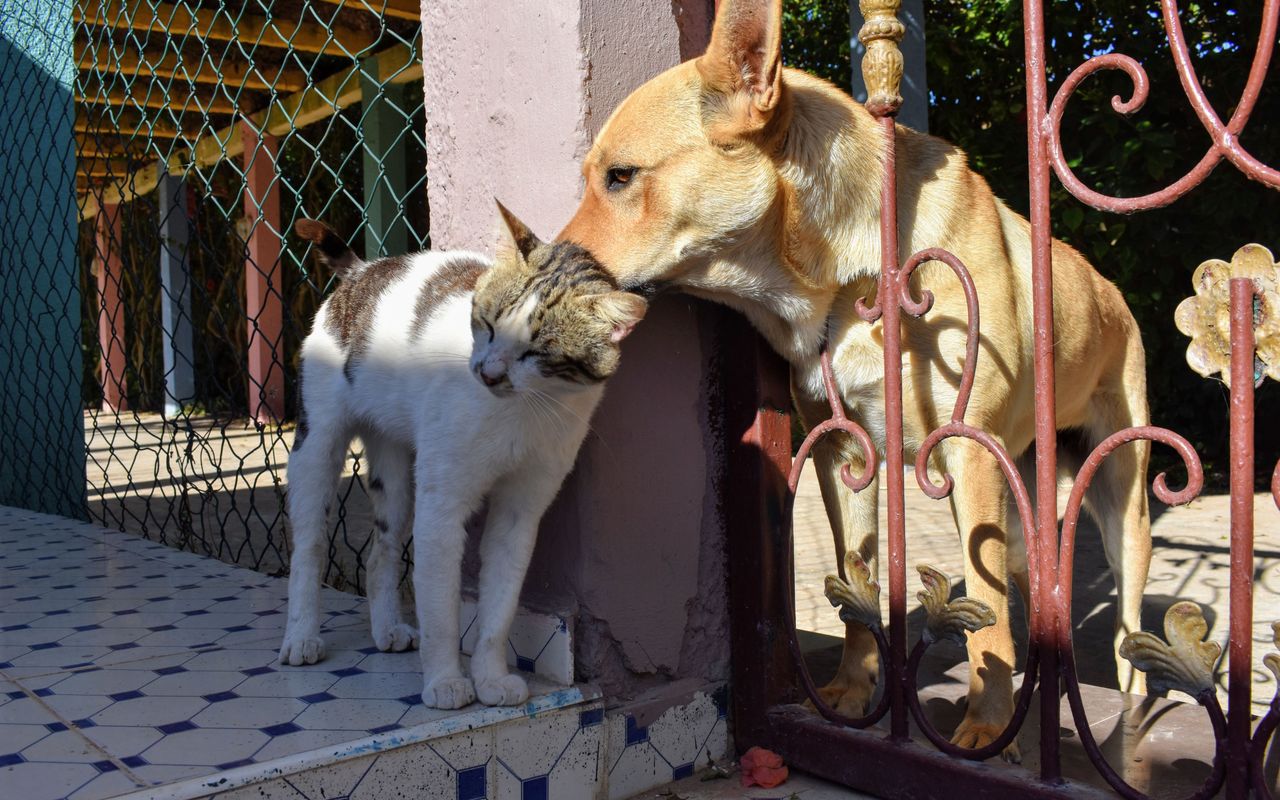
Bringing a cat and a dog under one roof can go two ways: a lifelong friendship, or weeks of tension, hiding and stress. The difference almost always comes down to how the first introductions are handled. Rushing it is the single biggest mistake owners make. With a little patience and the right steps, most cats and dogs can learn to share a home comfortably.
Why a Slow Introduction Matters
Cats and dogs communicate very differently. A wagging tail means one thing to a dog and something almost opposite to a cat. A dog that wants to play can look terrifying to a cat, and a cat that freezes or hisses can trigger a dog's chase instinct. A slow, controlled introduction gives both animals time to learn that the other is not a threat, and it prevents a single bad first meeting from shaping their whole relationship.
If you have introduced pets before, some of this will feel familiar from our guide on how to introduce dogs to each other, but cat and dog introductions need extra care because the two species read each other so differently.
Step 1: Prepare Separate Spaces
Before the animals ever meet, set up a safe zone for each. Your cat especially needs a room of its own with food, water, a litter box and high places to climb, somewhere the dog cannot reach. This becomes the cat's retreat for the whole process. Keeping them fully separated at first also lets each pet settle into the home at its own pace, much like helping a cat settle into a new home.
Step 2: Swap Scents
Smell is how both animals size up the world. For the first few days, swap scents before any face-to-face contact: rub a soft cloth on the cat and leave it near the dog's bed, and do the same in reverse. Feed both pets on opposite sides of a closed door so they start to link the other's smell with something good, like mealtime.
Step 3: Let Them See Each Other Safely
Once both are calm around the scent, allow a first visual meeting through a barrier, a baby gate or a slightly open door. Keep the dog on a leash and calm, and let the cat approach or retreat on its own terms. Never force the cat closer. Keep these sessions short and positive, and reward calm behavior from both sides with treats and praise.
Step 4: Controlled Face-to-Face Meetings
When both animals stay relaxed through the barrier, move to short in-room meetings. Keep the dog leashed and give the cat a clear escape route to higher ground. Watch the body language closely: a stiff, staring dog or a crouched, wide-eyed cat means you are moving too fast. Signs of stress here are easy to miss, so it helps to know the signs of stress in dogs and to watch for a cat that hides, flattens its ears or stops eating.
Step 5: Build Up Unsupervised Time
Only when calm meetings become routine should you leave them loose together, and even then, build up slowly. Keep separate feeding areas and make sure the cat always has a dog-free zone. Jealousy over food, toys or your attention is common at this stage; our piece on whether cats get jealous explains why sharing your attention fairly matters so much.
Mistakes to Avoid
The most common errors are rushing straight to a face-to-face meeting, punishing either pet for hissing or barking, leaving no escape route for the cat, and giving up after one tense encounter. Reactions like hissing and growling are normal early on. They are communication, not failure.
Be Patient
Some cats and dogs are relaxed together within days; others need weeks or even a couple of months. Let the animals set the pace. Done patiently, most introductions end exactly where you hoped, with a cat and dog that tolerate, and often genuinely enjoy, sharing their home and their people.
Book trusted, verified London caregivers in seconds.